
40 for 34 # 15 - May 30

Attitude Adjustment
A more dedicated approach to his development
helped Len Bias become a dominant player.
Maryland’s center Ben Coleman was a senior on the Terps' 1984 ACC tournament championship team. He told the Washington Post midway through the 1984 season that one reason Bias improved as a player was because he’d become a better listener. “You couldn’t talk to Lenny his freshman year,” Coleman said. “Criticism or advice would go in one ear and out the other. I would try and tell him that the players who wanted to get better would sit and shoot the breeze with other guys, listen to what peers had to say. But he didn’t take advice very well. But that’s changed as he’s gotten older.”
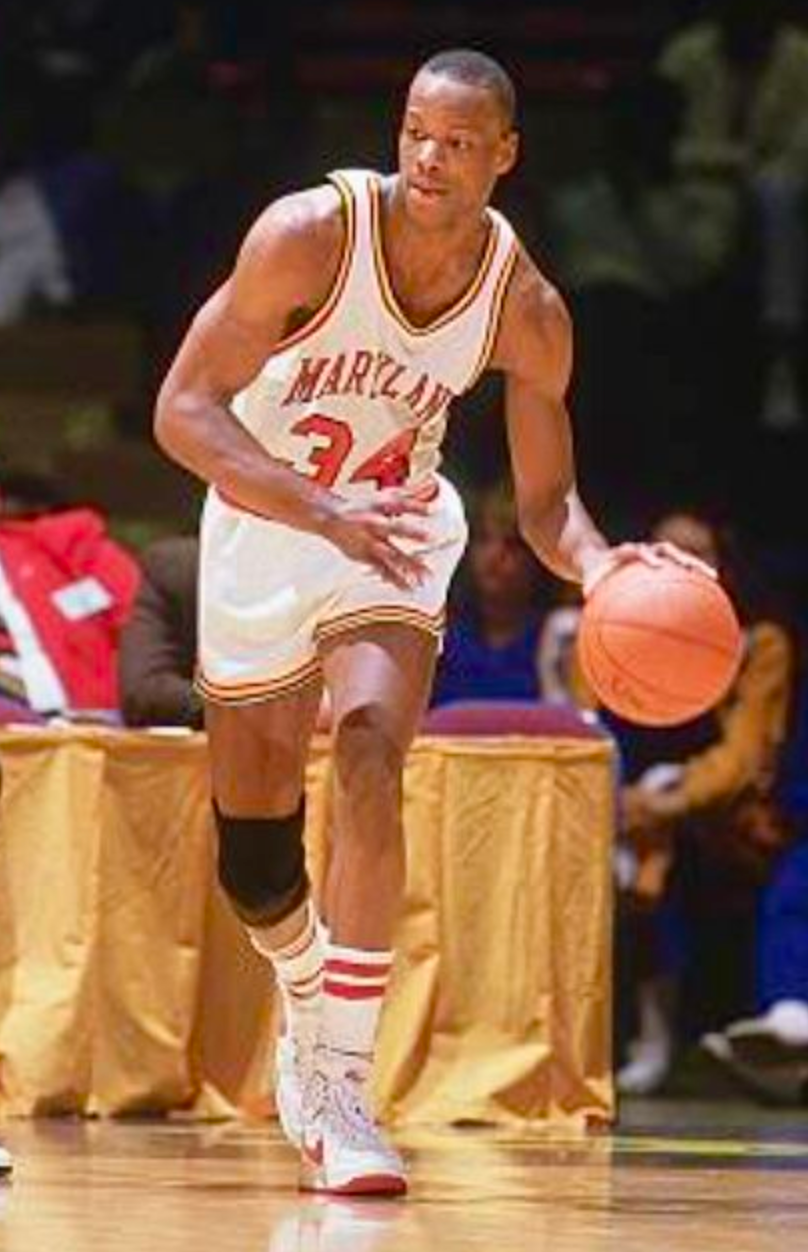
Johnnie Walker, his youth coach and mentor, often pressed Bias to work harder, telling him that if he would dedicate himself more to the sport, his potential was limitless. By the end of his strong sophomore season, with his confidence boosted, Bias had gotten the message.
Bias admitted that he worked hard on his game for the first time during the summer after his freshman year. “I could always shoot and I could always play inside,” he said in the Post story. “But I was never really worried about the specifics of what I did. I never did the things to make myself better, like repetition of certain drills. In the past, if I was supposed to work on something, I would do it once a week and be happy I did it at all.”
“His work habits changed,” says Brian Waller, his high school teammate and close friend. “He began to take things more seriously.”

Excerpted from the book,
The audio for this post was narrated by the author,
Dave Ungrady.

And listen to more about Len's early life in Episode 2 of the narrative podcast series, Len Bias: A Mixed Legacy



Comments